Design Concept
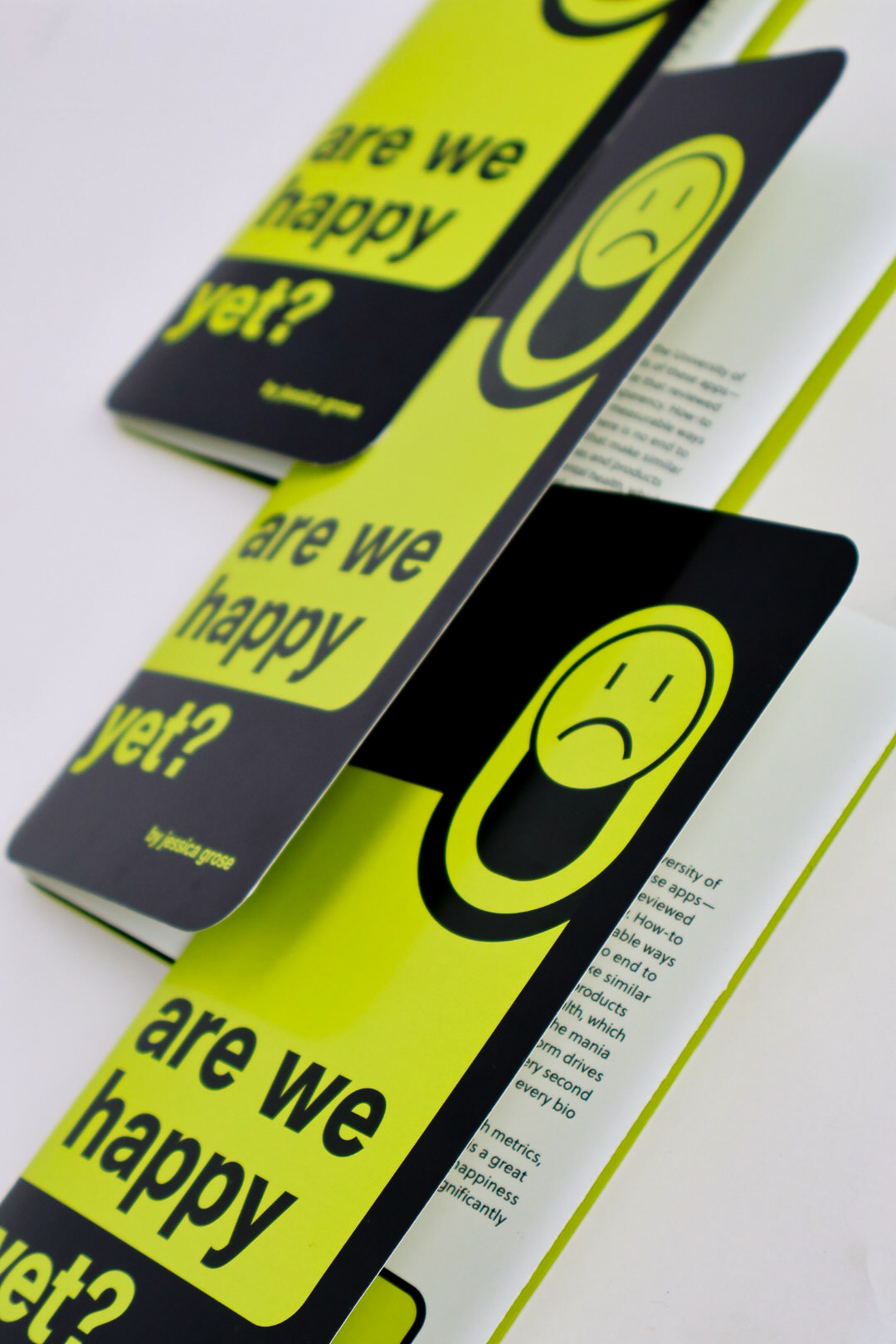
This pamphlet examines the rise of mood-tracking applications and the broader influence of the contemporary “happiness industry.” While many of these platforms position themselves as scientifically objective tools for emotional analysis, the project questions their ability to meaningfully quantify human experience. By exploring the tension between data-driven wellness culture and the complexity of emotion, it critiques the reduction of psychological states into measurable categories.
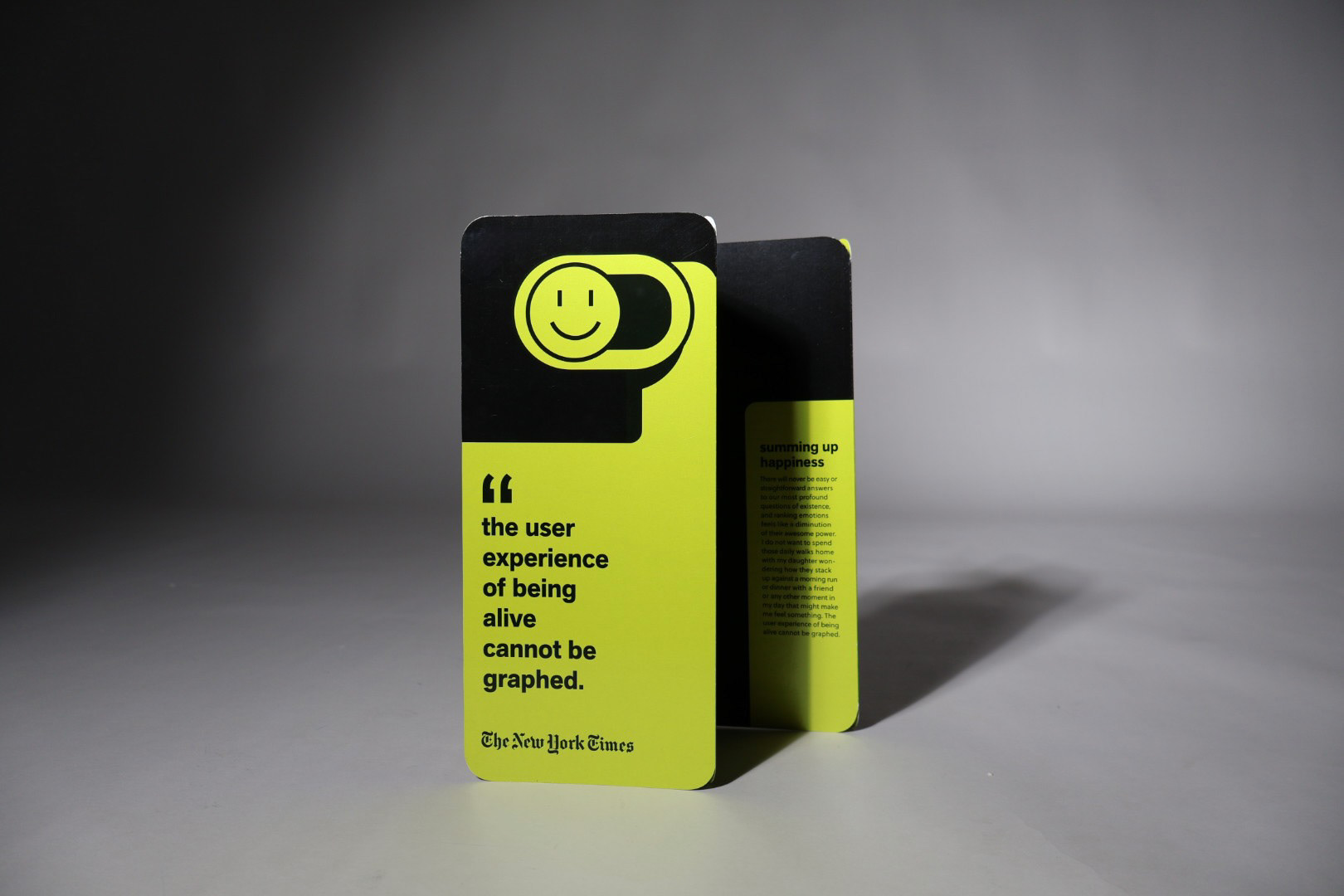
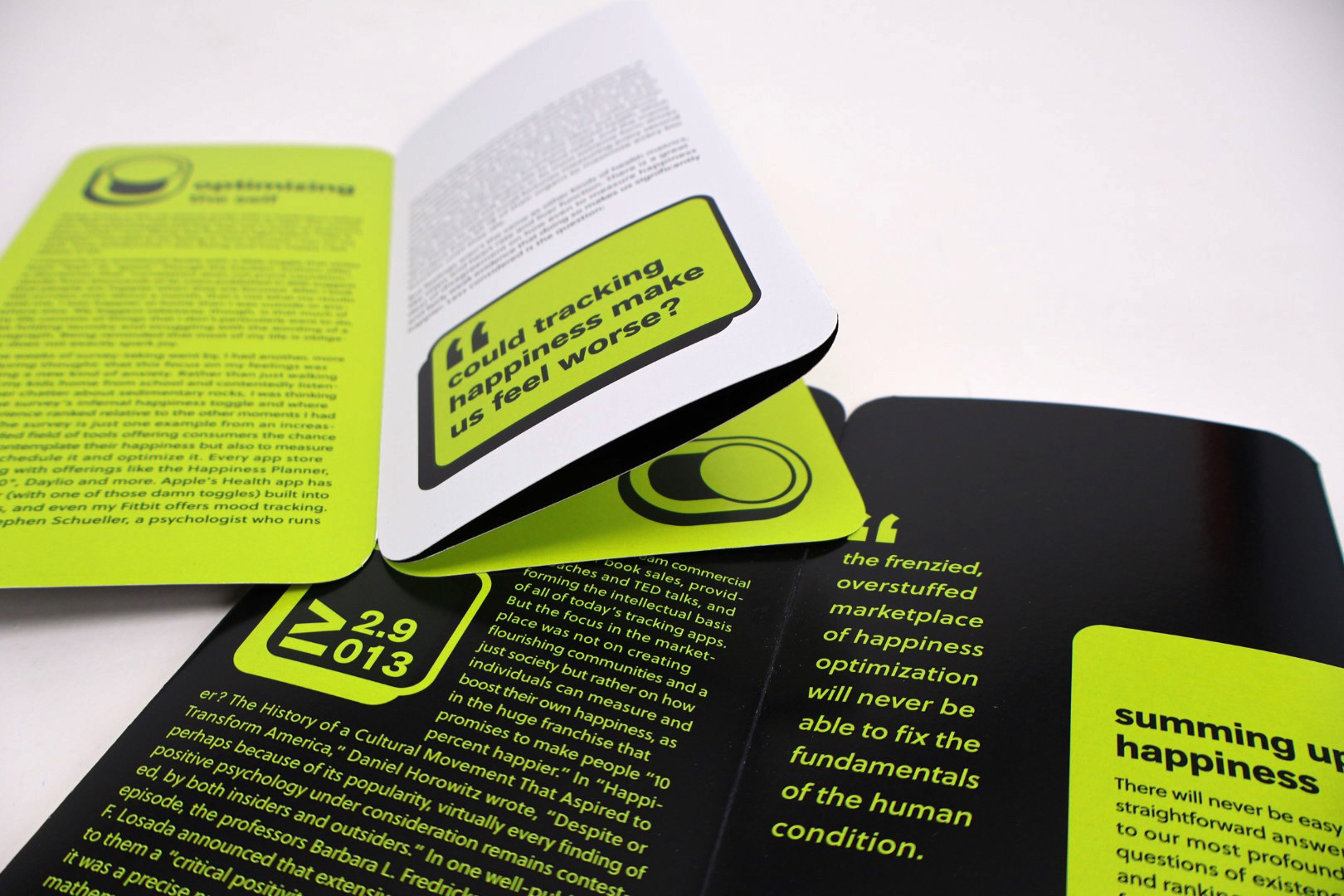
Visually, the project draws heavily from the principles of the Swiss International Style, combining structured grids, restrained typography, and asymmetrical composition with contemporary screen-based design aesthetics. A limited color palette of sickly yellow-green, black, and white establishes a clinical yet uneasy atmosphere, referencing both the sterility of digital wellness interfaces and the emotional extremes of depression and elation.
The accordion-fold format positions the piece as an object of informational media, reminiscent of pamphlets found in medical waiting rooms or public health environments. Through the integration of modernist design language and digital visual culture, it reflects the evolving history of happiness psychology—from ancient philosophical frameworks to contemporary app-based self-surveillance.
Based on an article for the New York Times by Jessica Grose